
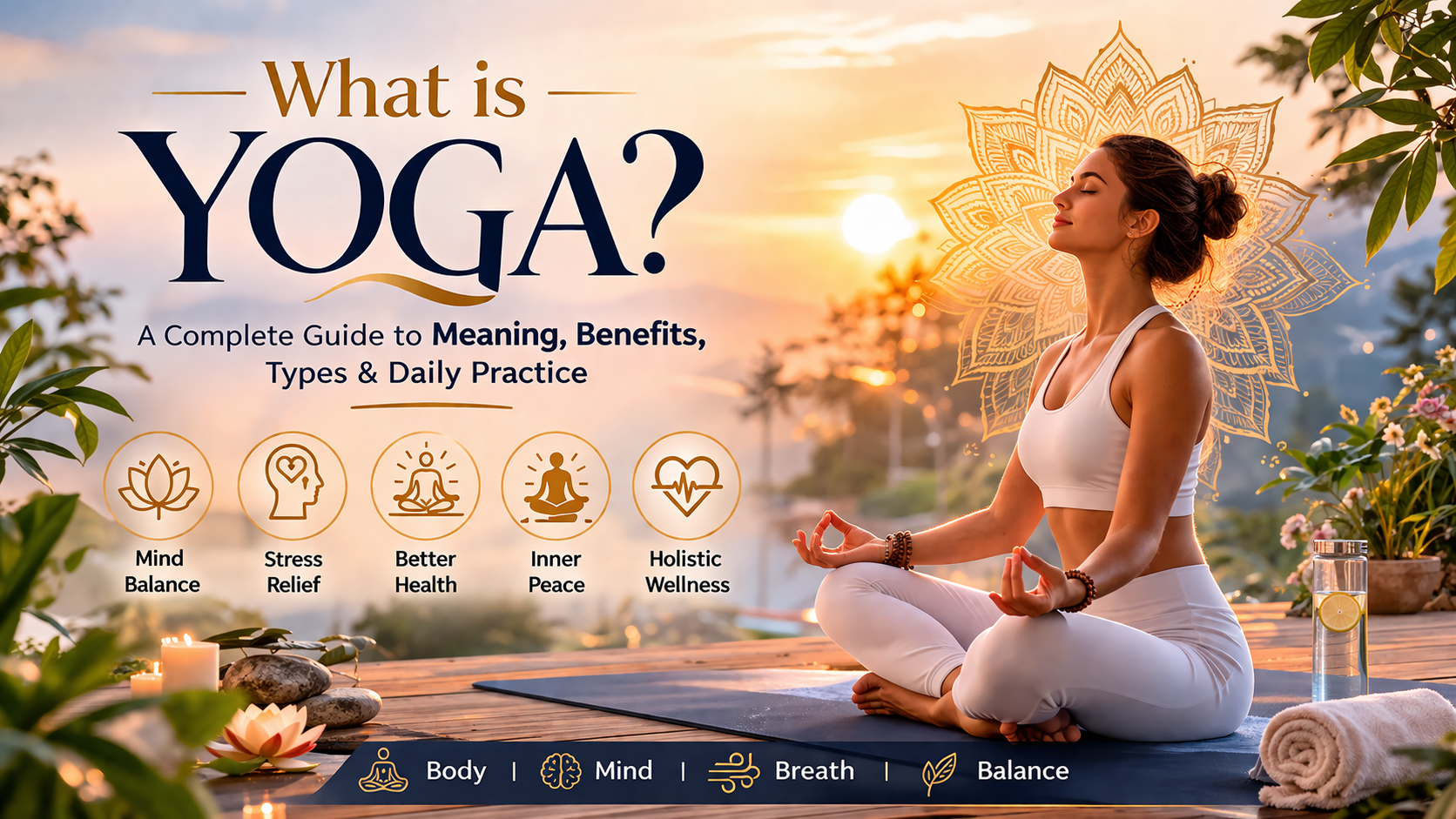
In today’s fast-paced world, stress, poor posture, anxiety, fatigue, and lack of focus have become common problems. Many people search for a natural way to improve health and create balance in life. One of the most powerful answers is Yoga.
Yoga is not just exercise. It is a complete lifestyle system that improves the body, mind, breath, emotions, and inner awareness. It has been practiced for thousands of years and is now respected worldwide for its physical and mental health benefits.
Whether you are a student, working professional, homemaker, senior citizen, or athlete, yoga can help you live better.
What Is Yoga?
The word Yoga comes from the Sanskrit root “Yuj”, which means to join, unite, or connect.
Yoga means the union of:
- Body and mind
- Breath and movement
- Action and awareness
- Individual self and higher consciousness
- Outer life and inner peace
In simple words:
Yoga is the practice of creating balance within yourself.
Is Yoga Only Physical Exercise?
No. This is one of the biggest misunderstandings.
Many people think yoga means only stretching or difficult poses. In reality, physical postures are only one part of yoga.
Yoga also includes:
- Breathing techniques
- Meditation
- Relaxation
- Mental discipline
- Self-awareness
- Healthy habits
- Emotional balance
- Mindful living
So yoga trains both the body and mind.
Why Yoga Is Important Today
Modern lifestyle creates many challenges:
- Long sitting hours
- Screen fatigue
- Back pain
- Neck stiffness
- Stress
- Anxiety
- Poor sleep
- Low energy
- Lack of focus
- Weight gain
- Emotional overload
Yoga helps naturally by improving movement, breathing, circulation, posture, and mental calmness.
That is why millions of people now practice yoga daily.
Main Benefits of Yoga
1. Improves Flexibility
Regular yoga makes muscles and joints more mobile. Even stiff beginners can improve gradually.
2. Builds Strength
Many yoga poses strengthen the legs, core, back, shoulders, and arms using body weight.
3. Reduces Stress
Breathing and mindful movement calm the nervous system and reduce stress hormones.
4. Better Focus & Concentration
Yoga improves awareness and helps the mind stay present.
5. Supports Better Sleep
Relaxation practices and breathwork improve sleep quality.
6. Better Posture
Yoga strengthens postural muscles and opens tight areas caused by desk work.
7. Increases Energy
Proper breathing and circulation help reduce tiredness.
8. Emotional Balance
Yoga helps you respond more calmly instead of reacting impulsively.
9. Supports Weight Management
An active yoga routine supports metabolism and mindful eating habits.
10. Overall Wellness
Yoga supports a healthier, more balanced lifestyle.
Main Parts of Yoga
1. Asana (Postures)
Physical poses that improve strength, flexibility, balance, and posture.
Examples:
- Tadasana
- Bhujangasana
- Vrikshasana
- Trikonasana
- Adho Mukha Svanasana
2. Pranayama (Breath Control)
Breathing techniques to increase energy and calm the mind.
Examples:
- Anulom Vilom
- Bhramari
- Kapalabhati
- Deep Belly Breathing
3. Meditation
Mental training for focus, awareness, and peace.
4. Relaxation
Deep rest practices like Shavasana reduce fatigue and stress.
5. Yogic Lifestyle
Discipline, self-control, kindness, truthfulness, and mindful living.
Popular Types of Yoga
Hatha Yoga
Gentle and traditional. Best for beginners.
Vinyasa Yoga
Dynamic flow with breath and movement.
Power Yoga
More intense and fitness-focused.
Yin Yoga
Slow poses held longer for deep flexibility.
Restorative Yoga
Very gentle and deeply relaxing.
Kundalini Yoga
Focuses on breath, mantra, and energy practices.
Chair Yoga
Useful for seniors or limited mobility.
Who Can Practice Yoga?
Yoga is for almost everyone, including:
- Beginners
- Students
- Office workers
- Homemakers
- Seniors
- Athletes
- Busy professionals
- People seeking stress relief
Yoga can be modified according to age and fitness level.
Best Time to Do Yoga
The ideal time is:
Morning
Best for energy, discipline, and freshness.
Evening
Good for stress relief and relaxation after work.
Most important rule:
Consistency matters more than timing.
How Long Should You Practice?
Beginners can start with:
- 10 minutes daily
- 15 minutes breathing + stretching
- 20 minutes beginner yoga flow
- 5 minutes meditation
Even short daily practice gives benefits over time.
Simple Beginner Yoga Routine (15 Minutes)
Warm-Up (3 min)
- Neck rolls
- Shoulder rotation
- Gentle side stretch
Asanas (8 min)
- Tadasana
- Cat-Cow
- Bhujangasana
- Child’s Pose
- Vrikshasana
Breathing (2 min)
- Deep breathing
- Anulom Vilom
Relaxation (2 min)
- Shavasana
Common Myths About Yoga
Myth 1: I Am Not Flexible Enough
Wrong. Yoga helps you become flexible.
Myth 2: Yoga Is Only for Women
Wrong. Yoga is for everyone.
Myth 3: Yoga Is Only Stretching
Wrong. It includes breath, focus, strength, and mental balance.
Myth 4: I Need One Hour Daily
Wrong. Even 10 minutes helps.
Myth 5: Yoga Is Only Spiritual
Yoga can be practiced for health, fitness, peace, or personal growth.
Safety Tips for Beginners
- Start slowly
- Never force painful movements
- Focus on breathing
- Learn correct alignment
- Use props if needed
- Be regular
- Consult a professional if you have medical issues
Yoga for Busy Professionals
If you work on laptop/desk daily:
Try this mini routine:
- Neck stretch
- Shoulder rolls
- Seated twist
- Wrist stretch
- Deep breathing
- Forward fold
- 5-minute meditation
This helps reduce stiffness and mental fatigue.
Why Yoga Is More Relevant Than Ever
As technology increases convenience, it also increases:
- Sitting time
- Stress
- Digital distraction
- Sleep problems
- Anxiety
- Physical inactivity
Yoga gives the balance modern life often removes.
Final Thoughts
Yoga is not about touching your toes or doing advanced poses. It is about improving how you feel, move, breathe, think, and live.
You do not need to be perfect. You only need to begin.
Start small. Stay regular. Let yoga transform your life naturally.
One-Line Definition
Yoga is the art and science of living in balance with body, mind, and breath.
FAQs
What is yoga in simple words?
Yoga is a practice that improves body, mind, and inner balance.
Can beginners do yoga?
Yes, yoga is excellent for beginners.
How many minutes of yoga daily is enough?
Even 10–20 minutes daily is beneficial.
Is yoga better than gym?
They serve different goals. Yoga improves flexibility, stress control, posture, and balance.
Can yoga reduce stress?
Yes, yoga is one of the best natural tools for stress management.